Why So Many Women End Up Overfunctioning in Relationships
Most women don’t end up in unhealthy relationships because they’re weak or don’t value themselves. They end up there because they’re loyal, hopeful, compassionate, and deeply committed.
Those are strengths — not flaws.
There are wounds that come from relationships that hurt. Many of us have been there; hurt, isolated, confused, unsure of where to go next. Leaving a relationship that was toxic or abusive is different than leaving one that simply ran its course. There is a weight of shame that follows you and tells you not to reach out for help. The lie whispers that you did this to yourself. The voice convinces you that you allowed this, so why should anyone help you now. You contributed to the problem by staying, by trying, by hoping.
And then there’s that old saying: “You get what you allow.” It’s such an ignorant statement.
I saw a post recently that said:
“What you tolerate becomes your standard. Let someone disrespect you once and it becomes the baseline. Accept mediocrity and that’s what you’ll get. Your life is a direct reflection of what you’ve been willing to accept.” - unknown (for good reason I think)
Here’s why I can’t get on board with that: it completely ignores the life circumstances, survival patterns, and nervous system adaptations that shape how we show up in relationships. It’s easy to judge someone from the outside when you’ve never had to unlearn the roles you were forced into as a child.
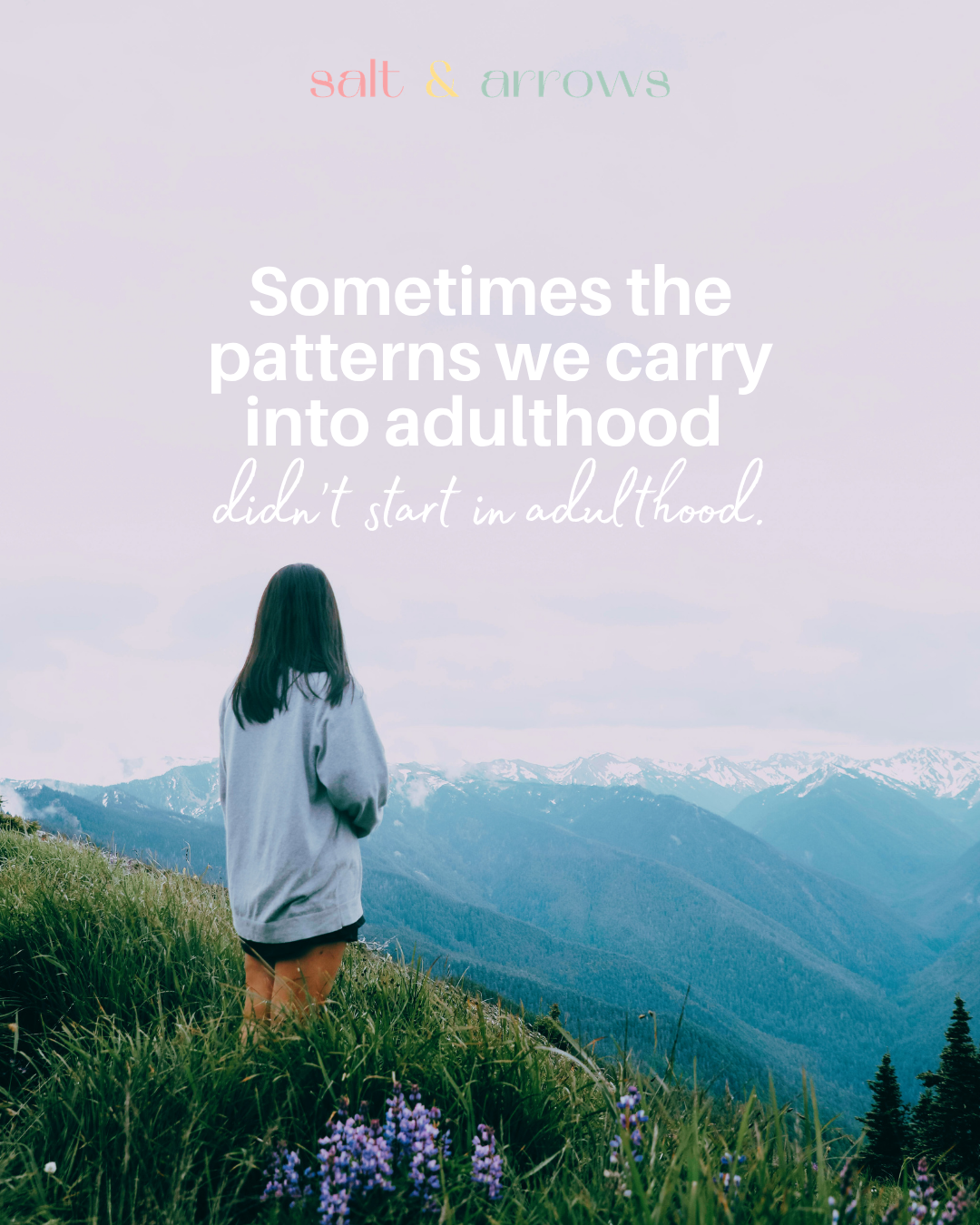
For many women, the patterns that show up in adulthood didn’t start in adulthood. They didn’t begin with a boyfriend, a partner, or a marriage. They didn’t begin with “bad choices” or “low standards.”
They began much earlier — in childhood — with parentification or some form of insecure or disordered attachment.
When a child grows up in an environment where they have to be the responsible one, the calm one, the helper, the emotional anchor, or the peacekeeper, their nervous system adapts. It learns that being useful equals being safe and not abandoned. That staying small equals staying connected. That meeting others’ needs is the path to stability and being known.
And those patterns don’t magically disappear when we turn eighteen. They follow us into friendships, dating, marriage, work, and motherhood. They shape how we love, how we attach, how we tolerate mistreatment, and how we understand our own worth.
Over the past few months, my counseling practice has drastically shifted toward this work (not intentionally on my part, but God clearly has a plan here) — helping women heal from these relational patterns and helping girls avoid them altogether. Not because of one relationship or one story, but because I keep seeing the same themes in so many lives. Strong, capable, deeply caring women who are carrying wounds that aren’t theirs to carry.

And the more I sit with these stories, the more clear it became: Adult overfunctioning is almost always rooted in childhood survival.
In the coming weeks, we’ll explore what this actually means — and how you can begin to untangle the patterns that once kept you safe but now keep you stuck. We’ll talk about how early caregiving roles shape your nervous system, how attachment wounds impact your adult relationships, and how to rebuild a sense of self that isn’t based on being the strong one, the fixer, or the caretaker.
Most importantly, we’ll talk about healing — real, grounded, compassionate healing — that honors your strengths instead of shaming your story.
You are worthy.
You are valuable.
And you deserve relationships that reflect that.